


The classic French mimosa is laughably simple: three ounces champagne, three ounces orange juice. That’s it. Equal parts, poured into a chilled flute, crowned with an orange slice that’ll inevitably get tossed aside. Some bartenders act like they’re splitting atoms when mixing this brunch staple, but there’s no mystery here. Just cold bubbly meeting citrus in perfect balance. The variations get fancier with elderflower and gin, but the original stays stubbornly, beautifully basic.
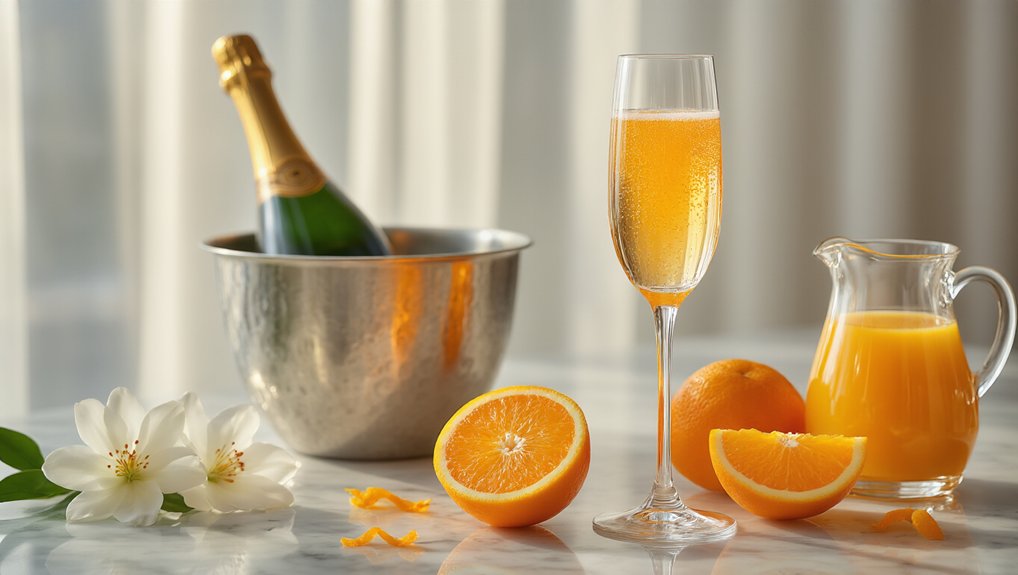
Every single French Mimosa starts with the same promise: equal parts champagne and orange juice. Three ounces of each. That’s it. That’s the sacred ratio that’s survived countless brunches and wedding toasts since before anyone bothered tracking cocktail trends. Pour it in a champagne flute, slap an orange slice on the rim, and congratulations—you’ve mastered one of the simplest drinks in existence.
Of course, simplicity never satisfied anyone for long. Enter the French 75 Mimosa, because apparently gin needed to crash the brunch party. This one demands a cocktail shaker, lemon juice, and half an ounce of simple syrup.
Simplicity never satisfied anyone for long, so gin crashed the brunch party.
The French 77 goes even further off script with elderflower liqueur and just a splash of orange juice. Four ounces of champagne though. At least they kept something sacred.
Then there’s the Chambord variation. One ounce of raspberry liqueur per glass, garnished with actual raspberries. Because nothing says “I’m sophisticated” like floating fruit in expensive alcohol. The Chambord adds a rich raspberry flavor that transforms the standard mimosa into something worth ordering twice.
The Grand Mimosa throws Grand Marnier into the mix. Same champagne, same orange juice, just with an extra splash of orange-flavored brandy. Innovative.
The preparation ritual remains stubbornly consistent across all versions. Chill the flutes. Pour the champagne slowly—God forbid those bubbles escape. Serve immediately. Some bartenders shake their gin mixtures first. Others just stir and pray. Either way, the drink hits the table looking elegant and disappearing fast.
Fresh-squeezed juice improves everything, naturally. Sparkling water can substitute for champagne if you’re watching calories or pretending to be healthy at 11 a.m. on a Sunday. Too bad most bars pour low quality champagne that turns decent orange juice into mediocre fizz.
The garnish game varies by drink: orange slices for classics, lemon twists for the 77, raspberries for the Chambord version. Each one perched on the rim or floating inside like tiny life preservers.
These drinks show up everywhere—weddings, brunches, anywhere people gather to drink before noon without judgment. Wine glasses work if you’re out of flutes. The ratios stay the same. The bubbles still rise. The orange juice still masks the fact that you’re drinking before lunch. Some traditions never change.
Frequently Asked Questions
Can I Use Sparkling Water Instead of Champagne for a Non-Alcoholic Version?
Sparkling water works fine for a booze-free mimosa. Nobody’s reinventing the wheel here.
The bubbles still bubble, the orange juice still tastes like orange juice. Sure, it won’t have that champagne bite, but honestly? Most brunch spots use bottom-shelf bubbly anyway.
The carbonation does the heavy lifting. Keeps things fizzy, light, invigorating. Perfect for designated drivers, pregnant friends, or anyone who thinks noon is too early for champagne.
Which it isn’t.
What Type of Champagne Works Best for Authentic French Mimosas?
Authentic French mimosas demand brut champagne. Period.
The French don’t mess around with sweet bubbles drowning their orange juice. Moët & Chandon Imperial Brut and Veuve Clicquot Brut dominate Parisian brunch tables for good reason—fine bubbles, balanced flavor, minimal sugar.
Sure, cava works if budgets matter. But real French mimosa makers reach for dry champagne. That “brut” label isn’t just fancy talk. It’s the difference between elegance and syrup.
How Long Can I Store Leftover Mimosa Mixture in the Refrigerator?
Leftover mimosa sits in the fridge for exactly 24 hours before it turns into a sad, flat disappointment.
That’s it. One day. The champagne loses its fizz, the juice gets weird.
Natural juice mixtures alone? Five days max before they go sour.
Want to stretch it? Freeze the juice part for up to a year.
But honestly? A day-old mimosa is like reheated coffee. Technically drinkable. Technically.
Should Oranges Be at Room Temperature or Chilled Before Juicing?
Room temperature wins. Cold oranges are stingy with their juice—those chilly little cells clamp down tight.
Science backs this up. Warmer fruit releases more flavor compounds, yields more juice, and makes mechanical juicers actually work properly.
Cold oranges? They’re fighting you every squeeze.
Sure, vitamin C takes a tiny hit at room temp, but who’s drinking mimosas for the health benefits? Nobody. That’s who.
What’s the Difference Between French and American Mimosa Ratios?
The French keep it simple. Equal parts champagne and orange juice. That’s it.
Americans? They’ve turned it into a math problem. Some bars pour two parts bubbly to one part juice — because apparently everyone needs a buzz before noon.
Others flip it, drowning the champagne in orange juice for the lightweights.
The French stick to their 1:1 ratio like it’s scripture. Americans treat ratios like suggestions.


